
I have always really enjoyed this episode, despite some issues that I will fully acknowledge. To my surprise, however, I’m realizing that it is not very well-liked among fans of the show in general. Is this just a case of me having a soft spot for Data episodes? I will admit that it is thematically somewhat un-challenging (and apparently Ron Moore himself has said that in writing it, he never quite figured out “what it was about”). Still, I can’t relate at all to viewers who find it dull or forgettable (as apparently many do); also, there are certainly others out there who share my appreciation of it. As strange as this may be to say about an episode in which Data “dies” and is buried on an obscure pre-industrial world, “Thine Own Self” could perhaps be classified as “feel-good TNG” (at least for me). But it also gives rise to plenty of reflection, even if none if it is especially novel or groundbreaking for Trek.
To be sure, this episode’s Data storyline represents one more instance of a type of story that we’ve seen over and over on TNG: our characters interacting, in one way or another, with the locals on some one-off planet of the week. I had a lot of very critical things to say about most episodes of this sort in the early years of the show, when the POTWs tended to strike me as unbelievably hokey and uninspired (and, all too often, when there was no logic to the idea of the Enterprise visiting them). For my money, the realization of one-off alien societies got much better as the show matured (even as the frequency of episodes featuring them declined), so that from season three onward, I mostly enjoy them (while still acknowledging their limitations). This, I recognize, is not true of everyone; in particular, many fans tend to feel much more frustrated and disappointed than I do with how similar most of these “alien” societies seem to human societies (and often, specifically western, Euro-American type societies) of the comparable era/level of social and technological development. These critiques are valid; they just, for the most part, don’t really “land” with me, emotionally. So, when commentators dismiss the Barkon IV village in this episode as a kind of generic Renaissance-land (as a surprising number of them do), on the one hand, I get it; still, for me, the setting works. It’s visually appealing, has enough going on not to feel merely like a hastily constructed television set, and is peopled by individuals who are interesting and real-feeling enough to serve as one-off supporting characters (all things that I can’t say for probably any POTW that the show gave us back in its first season). Specifically, here, the glimpse of a society just starting to move from a fundamentally pre-modern understanding of the world to a proto-scientific one, and possessing a degree of self-consciousness about this awakening, while nevertheless remaining profoundly unaware of all that it does not know, strikes a chord with me. Admittedly, there are the usual issues with the village seeming to have no connections to a larger society beyond itself, and all the inconsistencies and unanswered questions that this raises. Still, I can’t help but to appreciate a character like Talur, who is neither simply an ignorant yokel for Data to butt heads with nor the lone voice of reason in her otherwise benighted village, but a woman of her place and time—more educated than some, very capable of reason, but also overly confident in her all-too-limited scientific understanding, and not without her pride. Playing her against a version of Data who has lost his memory but is, of course, still his ultra-rational, ego-free, android self, makes for some fun interaction. Meanwhile, the show managed to actually find a strong child actor to bring the little girl, Gia, to life, and her interactions with Data are touching and enjoyable as well. Broadly, then, on the level of simply enjoying watching Data interact with the locals in the Barkonian village, this story definitely works for me. (Data’s accomplishments in a short time and with limited resources and no memories perhaps strain plausibility, and the plot gimmick in which he for some reason does not recognize the word “radioactive” because of his memory loss, but seems to retain most of the rest of his vocabulary and knowledge of basic science, is admittedly silly. But these issues don’t remotely kill the episode for me.)
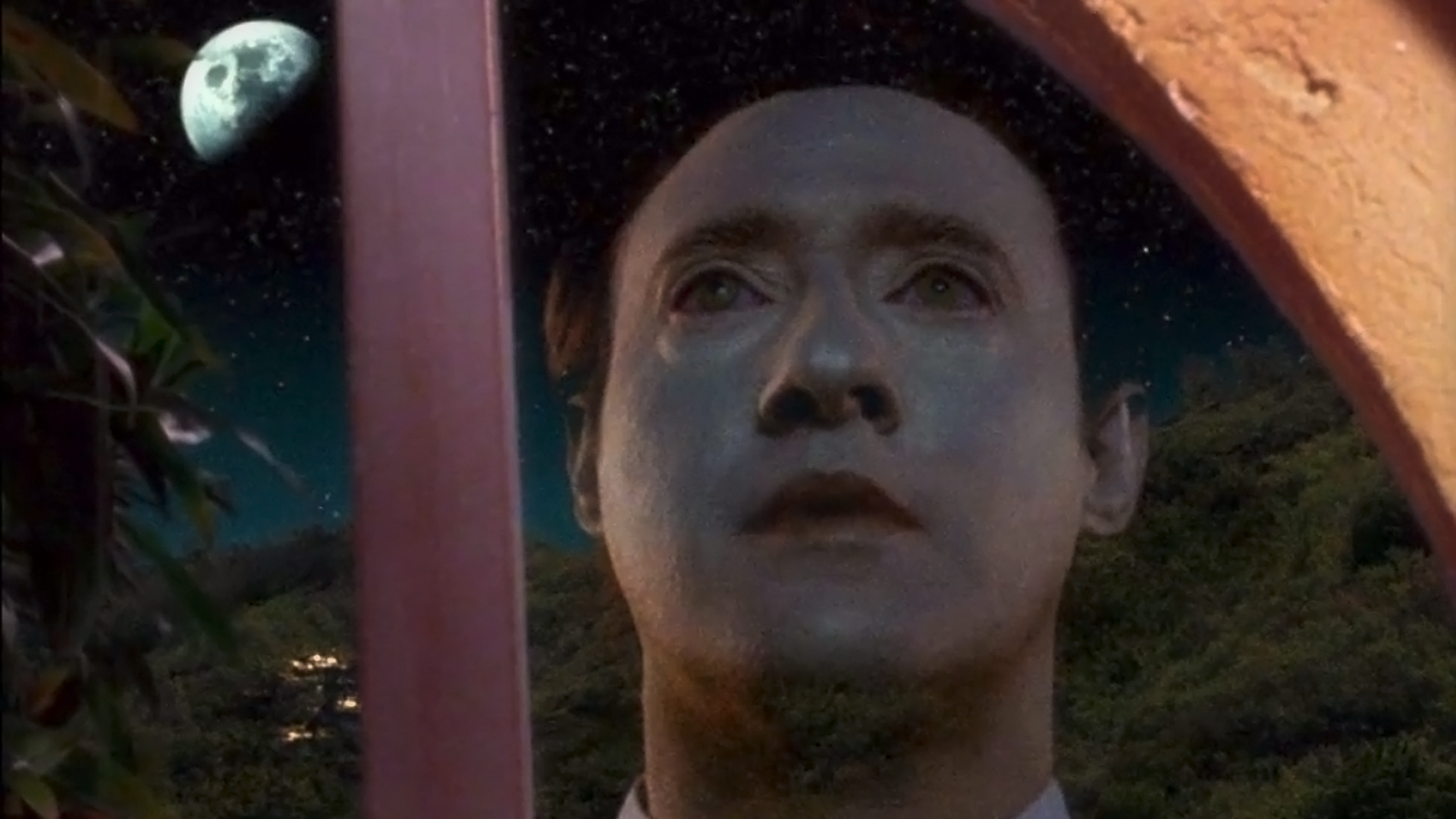
The starting premise for this story, and the way that most reviewers and commentators tend to frame it, is “Data as Frankenstein.” Fair enough, and as I have done with respect to various other episodes, I recommend perusing the thoughts of my favorite commentator on Jammer’s review site, William B (especially his third comment post), in regard to what the episode perhaps has to say about both the dangers and the promise of scientific progress as represented by both the worldview and the radiation danger that Data accidentally introduces to the village. But what grabs me the most about the episode concerns the ways in which it diverges from the Frankenstein story. Data, of course, can plausibly be dropped into this story because, like Frankenstein’s monster, he is an “artificial” sapient being created by a scientist, and in the episode, there comes a moment when both he and the villagers become aware of his “unnatural-ness,” and it provokes reactions of horror and fear. But Data, memories or no, is still Data, so unlike Frankenstein’s monster, he doesn’t react emotionally, either to the revelations about what he is or to the villagers’ treatment of him. Thus, there is no element of the villagers’ irrational fear and horror of the “monster” ending up turning him into a monster. When the blacksmith character starts blaming him for the sickness spreading through the village, Data calmly acknowledges the correlation and sets about working to determine what the exact link is; when his head is revealed to contain electrical circuits instead of flesh and blood, he more or less goes “huh” and continues with his work; when the villagers hunt Data down and “kill” him, they are able to do so because rather than fleeing or fighting back, Data is busy acting to cure them all of radiation poisoning. Again, there is absolutely a message here about reason and understanding (and compassion and good will), and it’s a characteristically Trek-ish one. Yes, science and technology introduce genuine dangers, but mainly by amplifying the ability of people to do harm when they allow themselves to be ruled by fear and irrationality and ego; if humanity (or Barkonity, or whatever) can master these lesser, darker impulses, they can use science and technology to make the world better. I certainly won’t deny that this theme resonates with me, even if it also hardly represents new ground for Star Trek at this point. But it’s the ways in which Data, in particular, represents and embodies these ideas, that make him, and this episode, compelling for me. The show, of course, has previously given us Lore as a foil for Data, illustrating just how terrifying and harmful the technological achievement that he represents could be—but at the same time, Data himself, with his sense of being incomplete without emotions, reminds us that “pure” rationality, however valuable, isn’t really an end in itself. Still, it does free him from most of our human flaws and failings. The bit in this episode where Gia’s talk about her dead mother being in a heaven-like afterlife resonates with the amnesiac Data, prompting him to gaze almost wistfully toward the stars as though unconsciously recalling his home on the Enterprise, is funny and poignant and walks right up to the line both of fourth-wall-breaking and of what I’m willing to accept in terms of his quasi-emotionality, but it speaks to the aspirational nature of who he is as a character; he is rationality striving to empower cooperation and happiness and humanistic values, not technological achievement for its own sake. To my mind, this episode rises above merely being either a retelling of Frankenstein, or yet another optimistic Trek story about the promise of technology, by specifically foregrounding the ways in which Trek’s ethos is baked into the core of who Data is as a character, and just letting the audience enjoy watching Data be Data. It can’t be an accident that the writers chose a line from Shakespeare that Data himself once memorably quoted (even if it was in a terrible episode), and that is about remaining true to one’s values and identity, as the source for this episode’s title.
Of course, when I reviewed “Conundrum” from season five, I expressed some disappointment concerning its simplistic, feel-good depiction of all the main characters mostly remaining who they were even without their memories. “Thine Own Self” takes the same view, but I find myself much more satisfied with it this time around‚ to the point of having just cited it as being central to what I most enjoy about the episode. This might partly be because we’re dealing with Data here, and I’m more willing to believe that Data would still be Data without his memories than I am to believe the same of a human character. But it’s also, I think, partly a matter of the two episodes having entirely different story structures and implicit narrative purposes. “Conundrum” thrust our heroes into a situation where they had to make important choices in the absence of contextual knowledge, and asked us to believe in them “getting it right” in the end (including figuring out what’s actually going on, which we as the audience don’t even entirely know) because they’re just that awesome. “Thine Own Self” is superficially similar (Data figures out that the sickness is caused by the metal fragments, and devises a cure for it, all without the benefit of his usual self’s knowledge about radiation, etc.), but the tension in the episode doesn’t arise from “what’s causing the illness?” (the audience knows already), or even from “will Data be able to cure it?” (of course he will, and the cure itself isn’t the interesting thing). Some of the tension arises precisely from the dramatic irony of the audience knowing that the villagers should not be opening Data’s container and futzing with its contents, in fact. But also, the moral stakes are just a lot lower here (no one is weighing whether or not to obliterate ships full of alleged enemies they don’t even remember), and the pleasure comes largely from the ways that Data’s nature interacts with that of the village and situation in which he finds himself, and causes events to turn out very differently than they might have had he been anyone else. I think. Honestly, I’m not sure if I’ve entirely put my finger on why I react differently to these two episodes with similar takes on amnesiac identity continuity (nor do I want to overstate the difference; after all, I (on one hand) like “Conundrum” despite my criticisms, and I’ve (on the other) already acknowledged that “Thine Own Self” is similarly a bit of an un-challenging feel-good installment).
Okay, changing gears. Alongside the Data story, this episode also features a shipboard subplot in which Troi struggles her way through a “bridge officer’s test” and ultimately earns a promotion to Commander. This bit draws heavy criticism from a lot of fans, who tend to argue a) that just passing a test doesn’t seem like it should be the way one earns a promotion; b) that suddenly promoting Troi to a higher rank than that held by either Data or Geordi, especially after her embarrassing performance when briefly in command in the episode “Disaster” (which she explicitly references here) and in light of her general tangential involvement with the running of the ship, feels insulting and wrong; and c) that studying for a few days and then passing a test to qualify as a bridge officer, for someone whose training and career has mostly been focused on other kinds of expertise, doesn’t make any more sense than if the show had had one of the other characters decide one day that they wanted to be a therapist, and achieve that goal via similar means. Personally, I mostly agree with all of these points, but they lead me to a somewhat different conclusion than merely that this is a dumb or bad story. First, some of what’s wrong here stems not from missteps in this episode, but rather from things that have been baked into the show from day one. I have always thought, and still do, that having one of the main characters be a counselor was a worthy innovation that is to the credit of Roddenberry and the others who imagined TNG into being—but I’ve never been nearly so sure that it made much sense for this therapist character to be a Starfleet officer, much less to hang out on the bridge advising the captain, or be a member of his senior staff sitting in on briefings, etc. For one thing, there’s the fundamental conflict of having your therapist also be your coworker or your direct subordinate or whatever (not to mention also your friend, given how chummy the main characters all are with each other). For another, there are the questions that I alluded to above about the very different kinds of education and training required for these two roles. However, the creators of the show made the decisions that they did regarding Troi’s character, so episode writers six years later had no choice but to work within those parameters. Similarly, part of the reason why the idea of Troi as a command officer, or promoting Troi ahead of a Geordi or a Data, feels so wrong, stems from the show’s consistent poor handling of the character over six-plus years. The truth is, neither of TNG’s two main female characters were well served over the course of the show, and it’s hard to miss the sexism underlying this unfortunate history. (Just the bare fact of putting the only two women into the “caretaker” roles of doctor and counselor is disappointing.) So, to a large extent, I see a story like this one as a late-series effort on the part of the writers to take Troi more seriously as a character, and try to finally do something interesting with her (similar to having her start wearing a regular uniform, and giving her the “Face of the Enemy” episode, in season six). I agree that, in this case, it perhaps doesn’t quite work (too little, too late, etc.)…but I perhaps still appreciate the writers actually making an effort, however belatedly. And then, separately from all of that, I also have one very specific criticism for what this episode actually gives us. I don’t object to the idea of Troi conceiving this ambition, or taking the test, or passing the test; all of that strikes me as perfectly fine, and a worthy direction in which to take the character. But I do wish that the concept of a “bridge officer” had been a bit more clearly defined, and that the stakes of the test had been specifically and solely about qualifying to take shifts in the center seat during night watch or whatever—i.e., not about rank or promotion. One part of this is…okay, what exactly does it mean to be a “bridge officer”? Clearly, it’s not merely that one serves on the bridge; Troi has always done this, as do all manner of low-ranking conn officers, right down to Acting Ensign Wesley Crusher. So probably it means, rather, being eligible to command the bridge, right? Now, we’ve seen characters of various ranks serve in this capacity at need over the years (Geordi did it in a season one episode, when he was a mere Lieutenant, Junior Grade and not yet Chief Engineer), so clearly being eligible for this role is not directly rank-dependent. Indeed, unlike receiving a promotion (which we normally hear of as being something one earns through distinguishing oneself in the line of duty in various ways), this very much does seem like the sort of thing that one might simply need to pass a test (even if it’s a pretty rigorous test) to qualify for. So, if the Troi story had ended with her simply “qualifying as a bridge officer,” and not with her being promoted to Commander rank, I would have no beef with it. The actual brief story, with the stumbling block for her being the idea of potentially having to order someone to their death, does work for me (and make sense for her as a character), and it’s even one of those things that crop up every now and then on the show that help to keep it grounded in reality, notwithstanding its general utopian-future idealism. So…all that to say, I largely appreciate this episode’s B story, with the one caveat about the rank thing. (Some others have argued that, even in real-world militaries, rank works somewhat differently for medical personnel, say, than for others, and that what TNG did here is not really out of line when seen in that light. That may be; I don’t personally have the knowledge to weigh in on this. However, there’s really no support for this point of view within the show itself—and the end-of-episode beat about Data having to call Troi “sir” from now on seems to imply something different. Also, it’s been pointed out that rank is distinct from position on the ship, and that Data remains third in command despite Troi’s higher rank. I get that, but still think that what we see in this episode should not be how one advances in rank.)
I think I’ve always been more annoyed by generic aliens and generic cultures than you have, so maybe it’s no surprise that I find this episode disappointing, though my main memory of it is that it just didn’t seem to be about much of anything and was just a bunch of stuff that happened. It feels like an interesting premise, and it’s not offensive to the Trek canon; it just strikes me as really underdeveloped. Though admittedly I haven’t seen it in many years.