
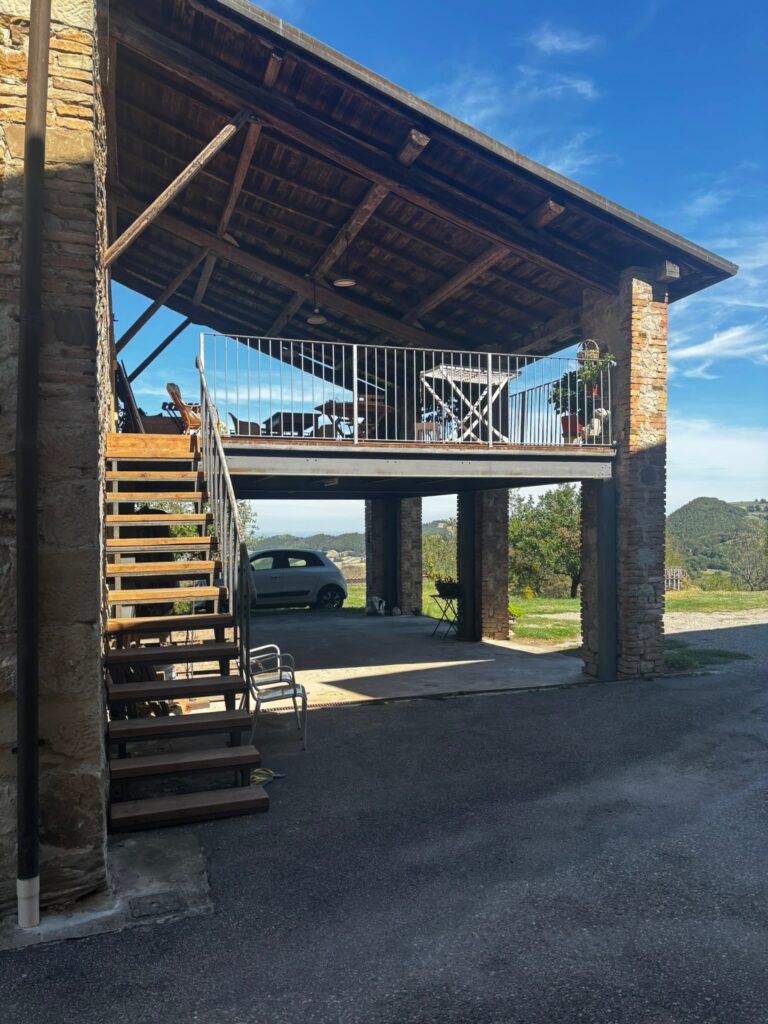
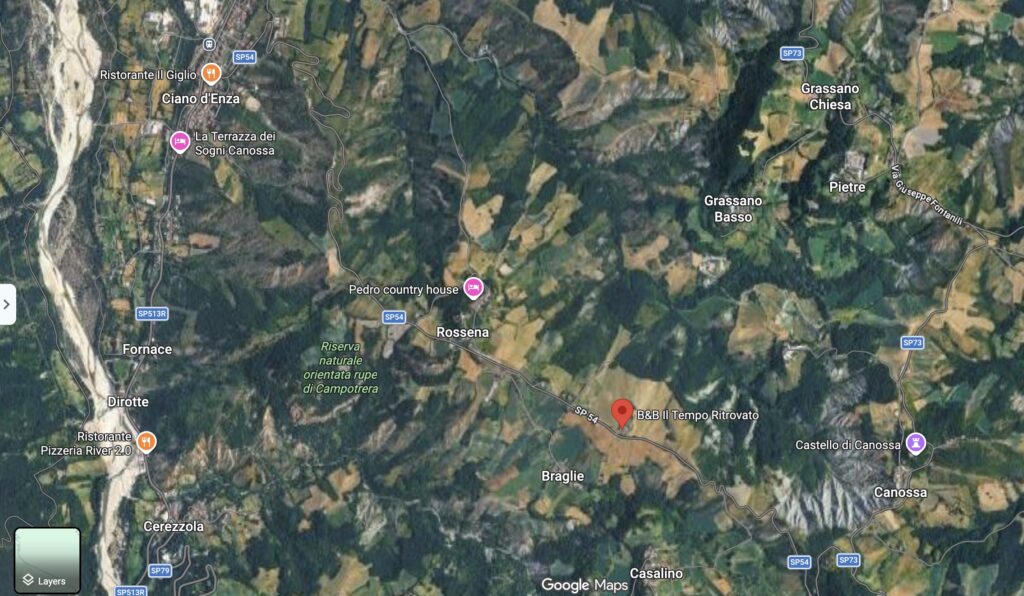
B&B Il Tempo Ritrovato, located roughly two and three-quarter miles (~4.5 kilometers) southeast of the village of Ciano d’Enza, occupies a building that dates to the 14th century. From the outside, it looks like this:
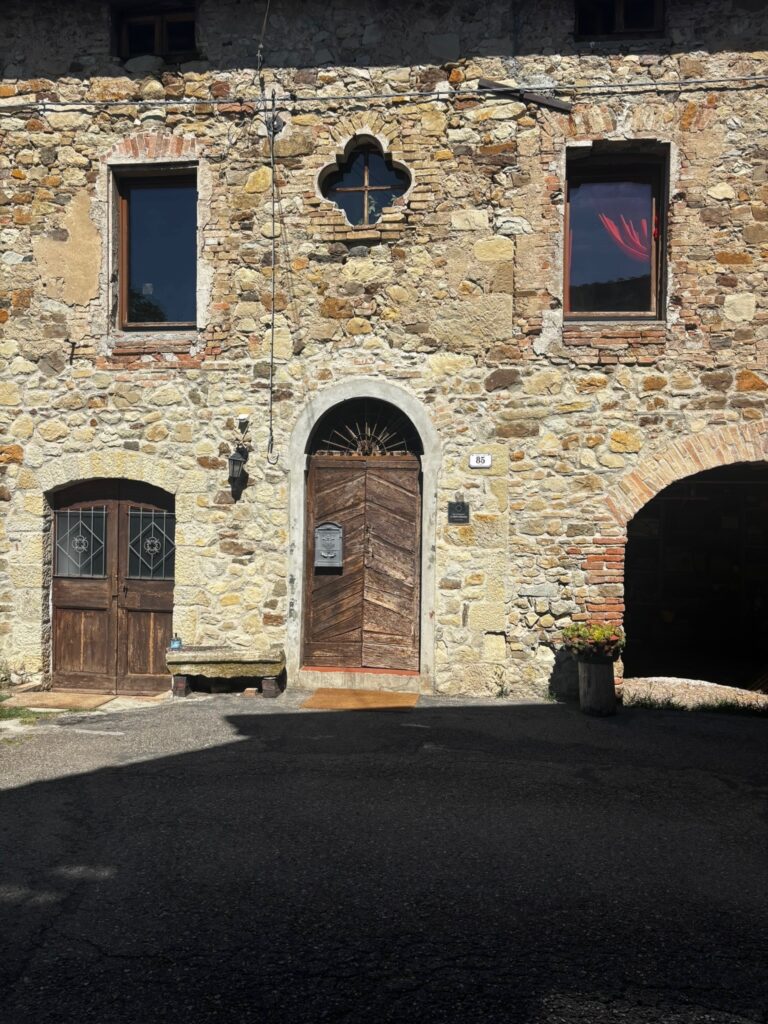
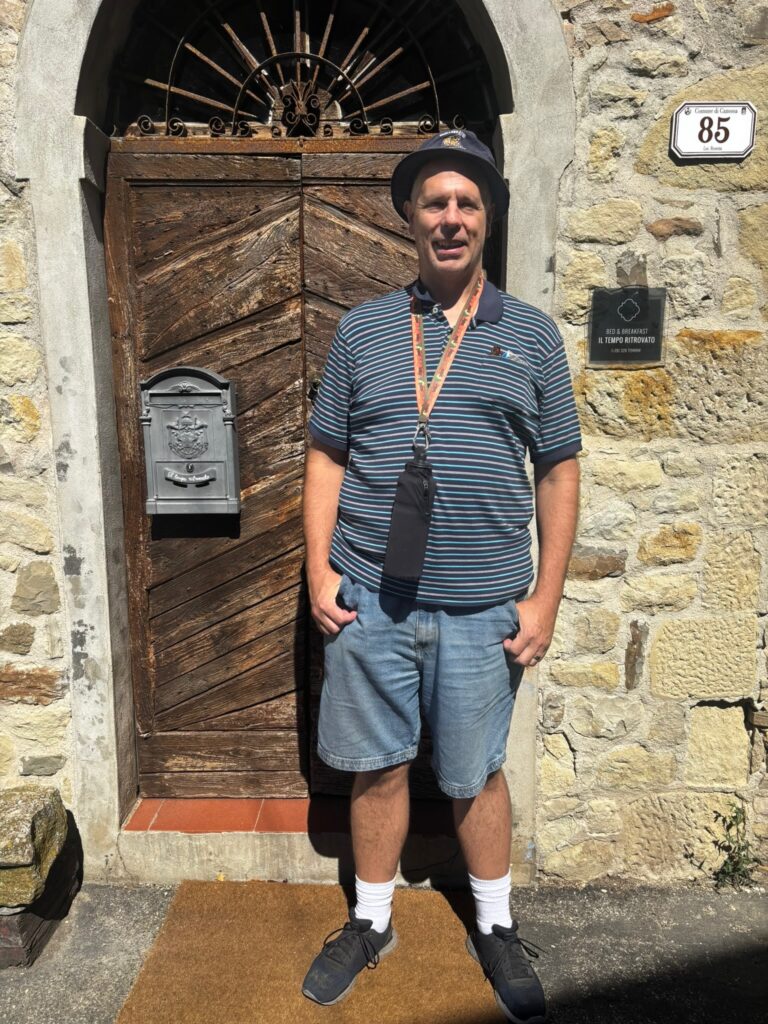
Upon our arrival, though, it was too dark and we were much too tired to really take in its exterior appearance. Our host, senior (Isolina, who had picked us up from the bus stop), showed us to a room that was straight ahead from the front door and up a few steps, told us that breakfast would be served at 8:00 am but that we were excused from putting in an appearance that early due to our jet-lagged state, and bade us buonanotte.
Here are some pictures of what our room looked like:
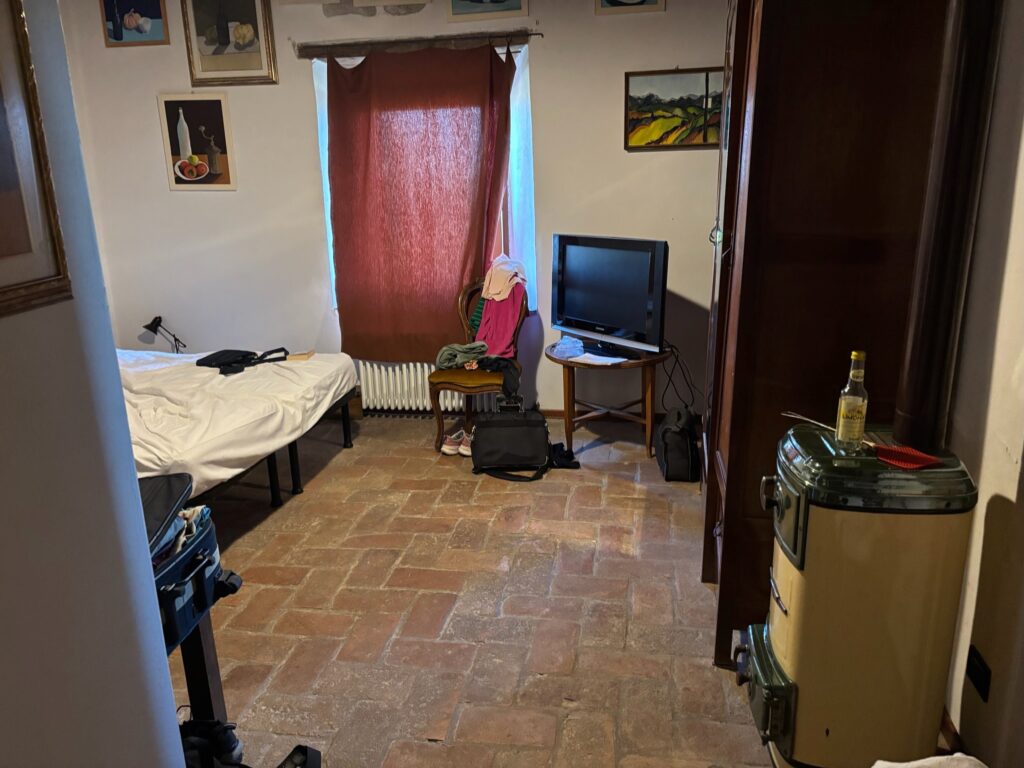
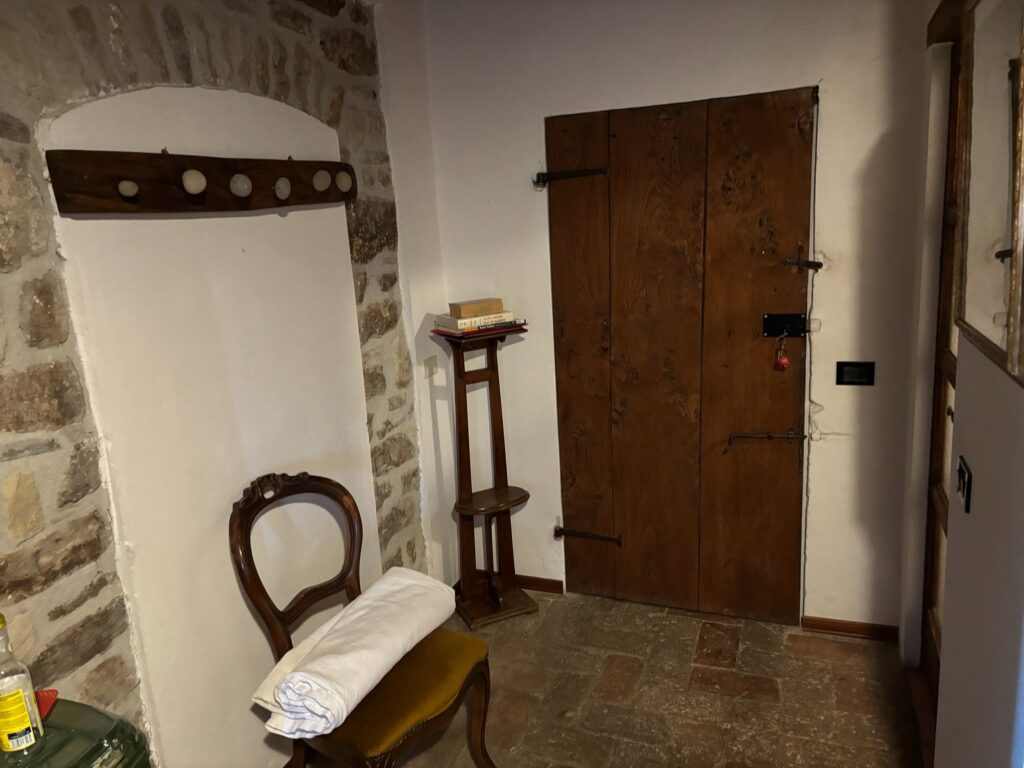
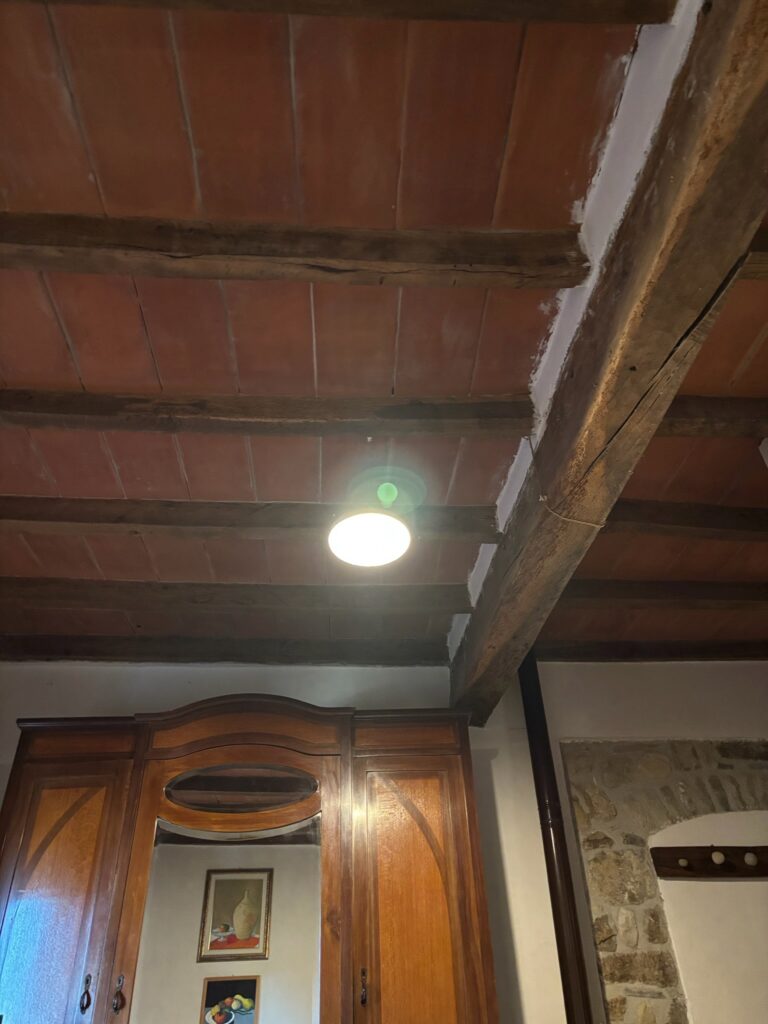
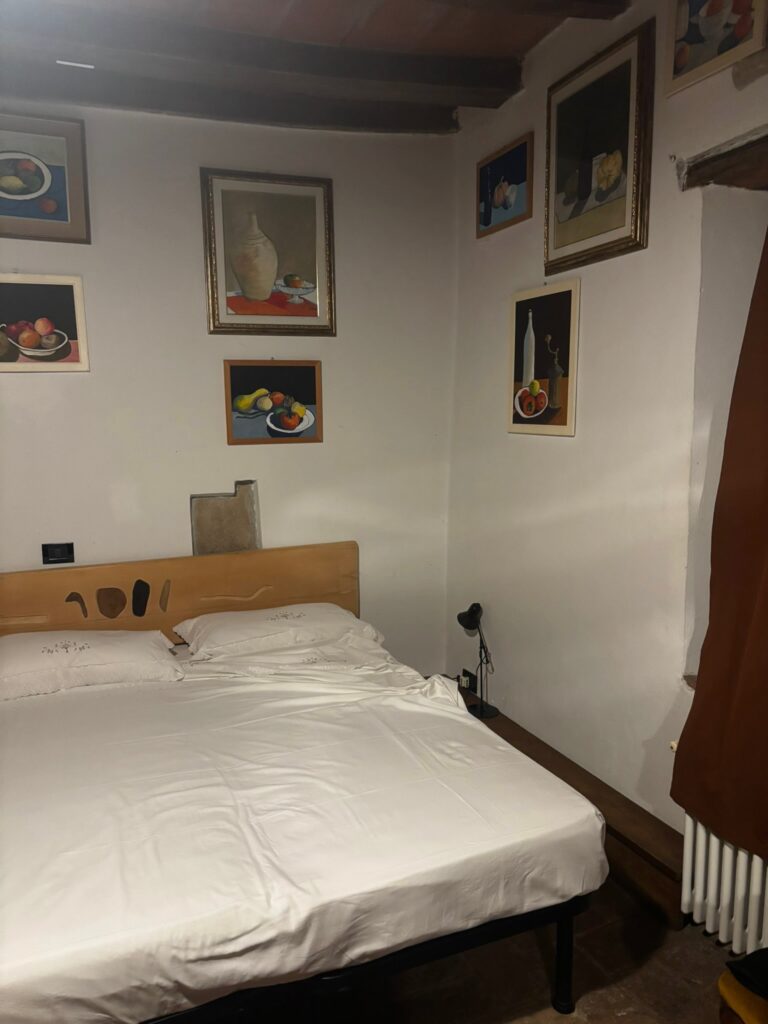
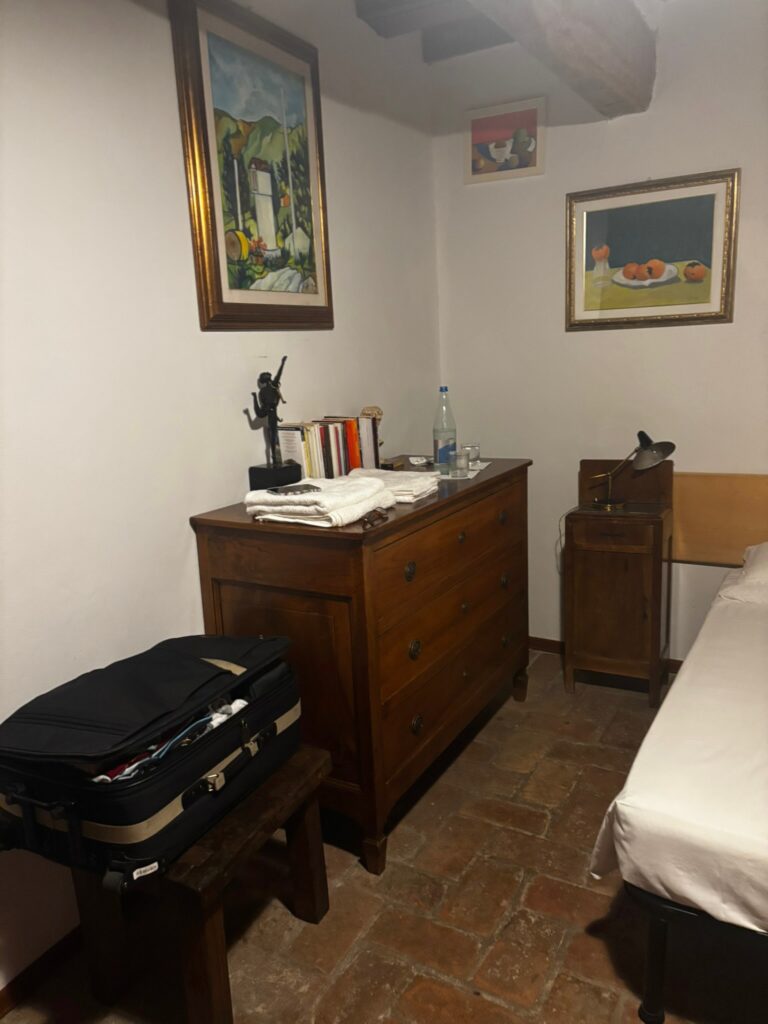
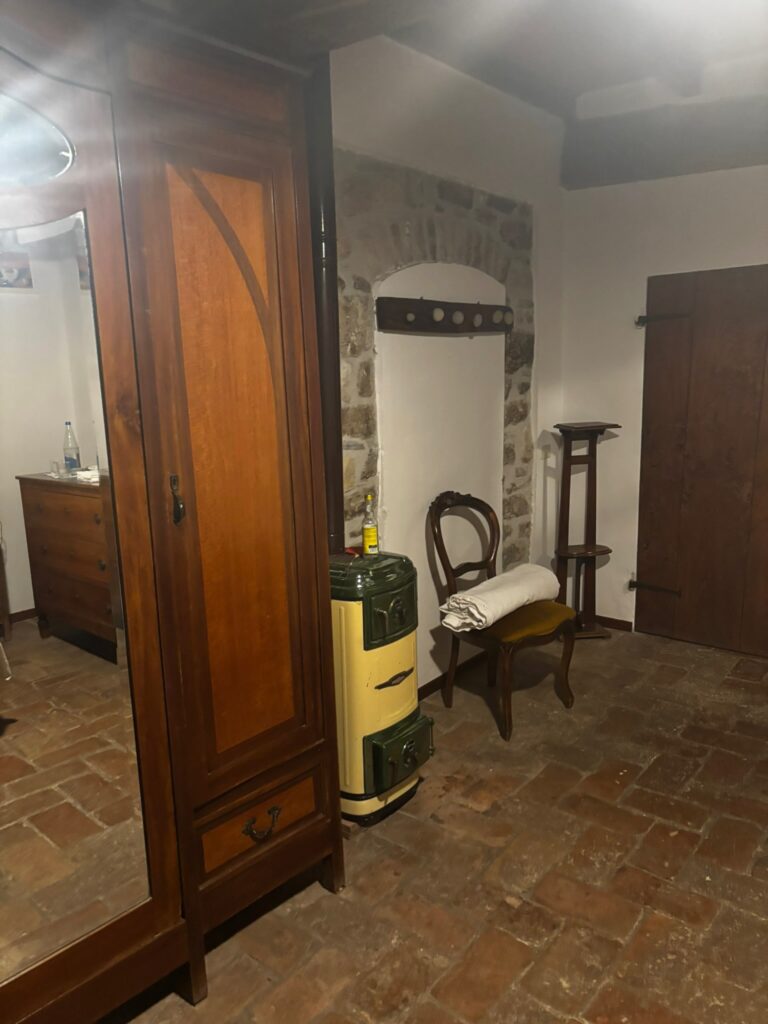
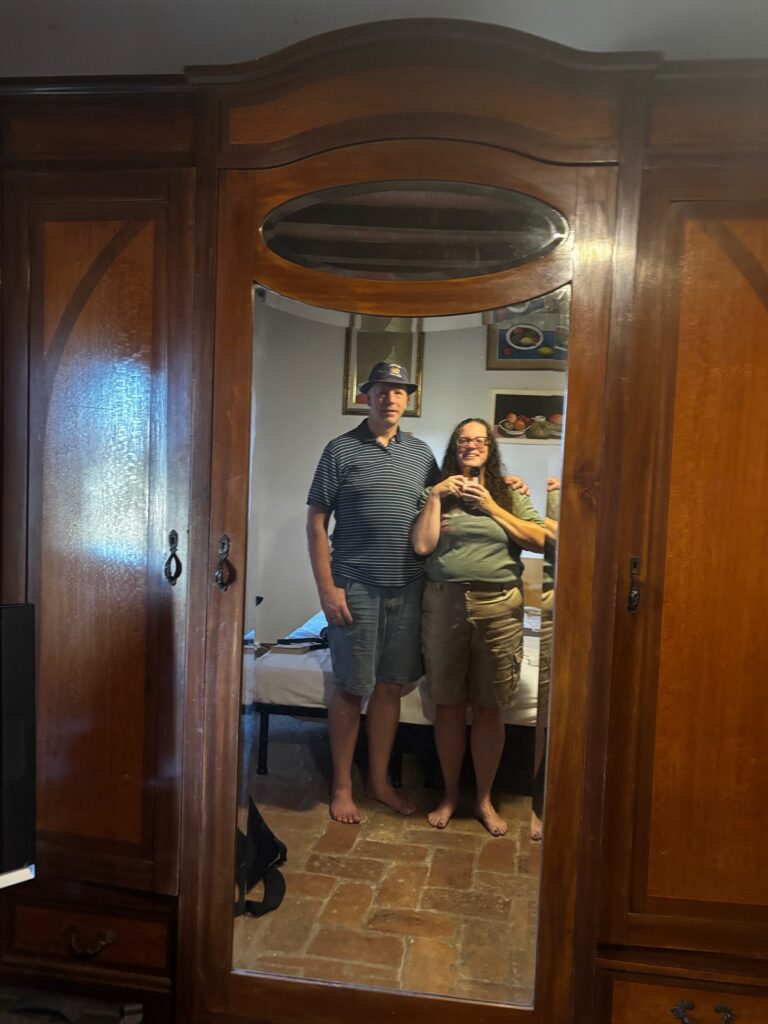
It was really cool…but not literally, as there was no a/c and the window could only be opened a crack. Despite the heat, though, we collapsed and slept a good long while.
A couple days before our trip started, Emily had unfortunately come down with a cold. She was feeling a lot better by the time we actually got to Italy, but by then I was coming down with it. 🙁 My throat was pretty sore by the time we got to the B&B, and by morning, I had a full-blown cold…as well as a killer headache, whether from caffeine withdrawal (no Mountain Dew since leaving MN), or jetlag and general travel stress, or heat, or some combination thereof. So, upon rising on our first morning in Italy, I was not exactly at 100%.
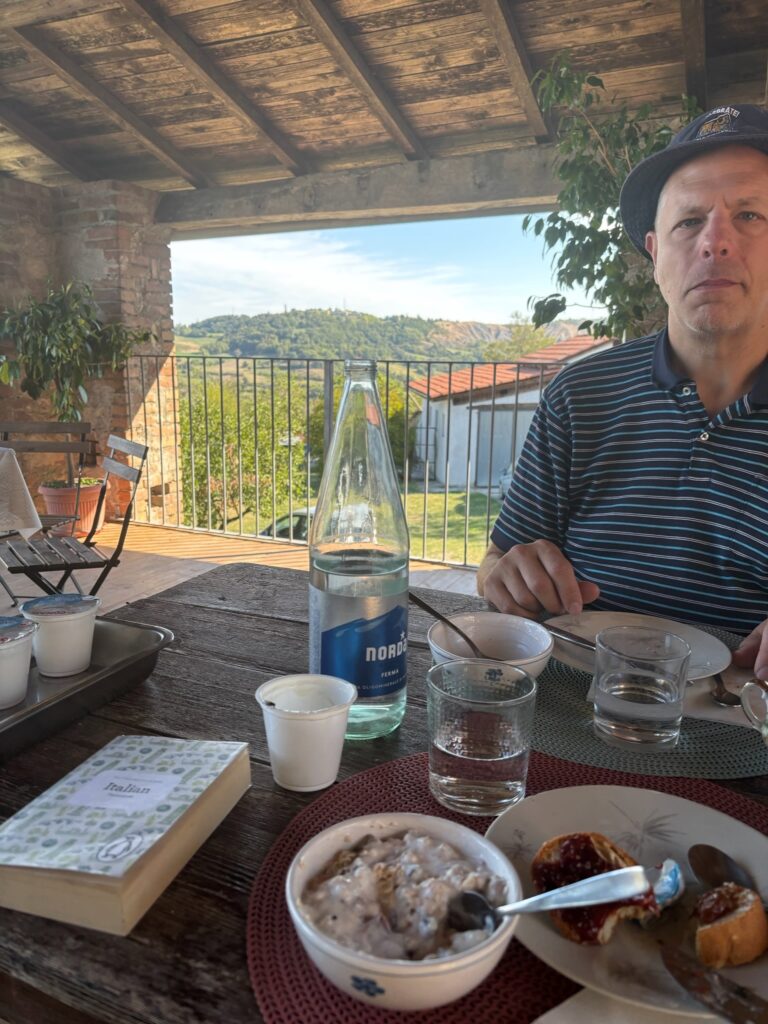
Oh…and lest I forget, we woke to the strains of somebody playing a cello. Said cellist (who must have been practicing out on the terrace) was later spotted walking away from the building, instrument in tow. Even though what we heard was just her practicing, it was obvious that she was really good. It was a pretty awesome way to be awakened on our first morning it Italy! Also, halfway through breakfast, I had to run back to our room to try to get a massive sneezing fit under control. The morning was…a study in contrasts.
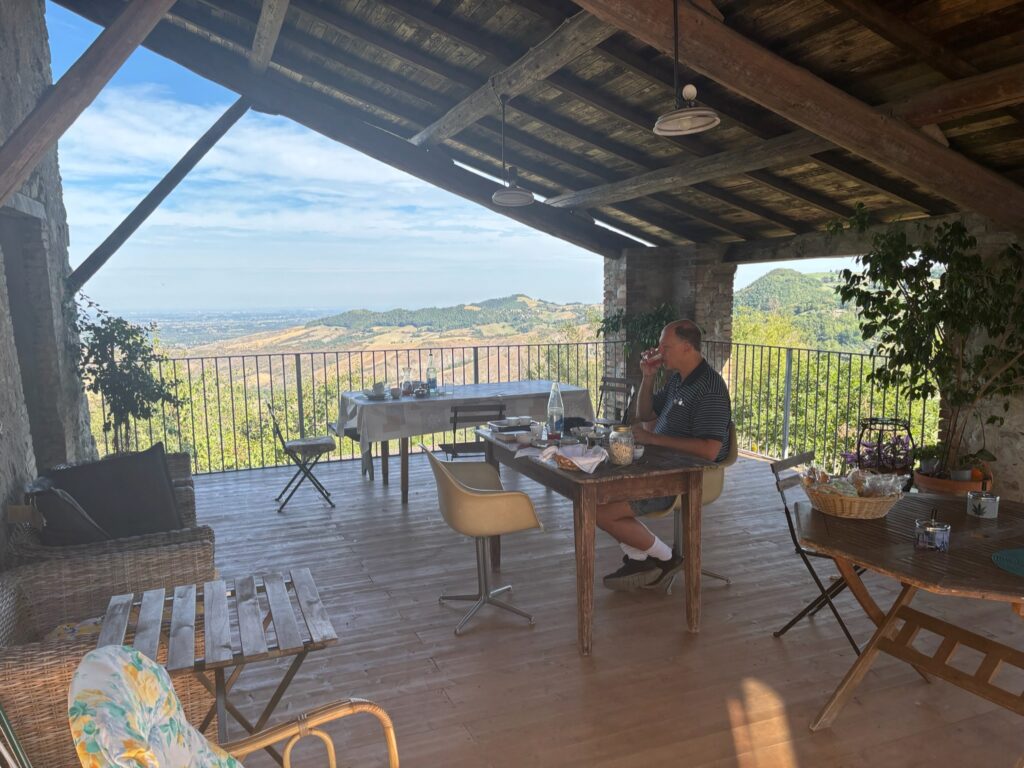
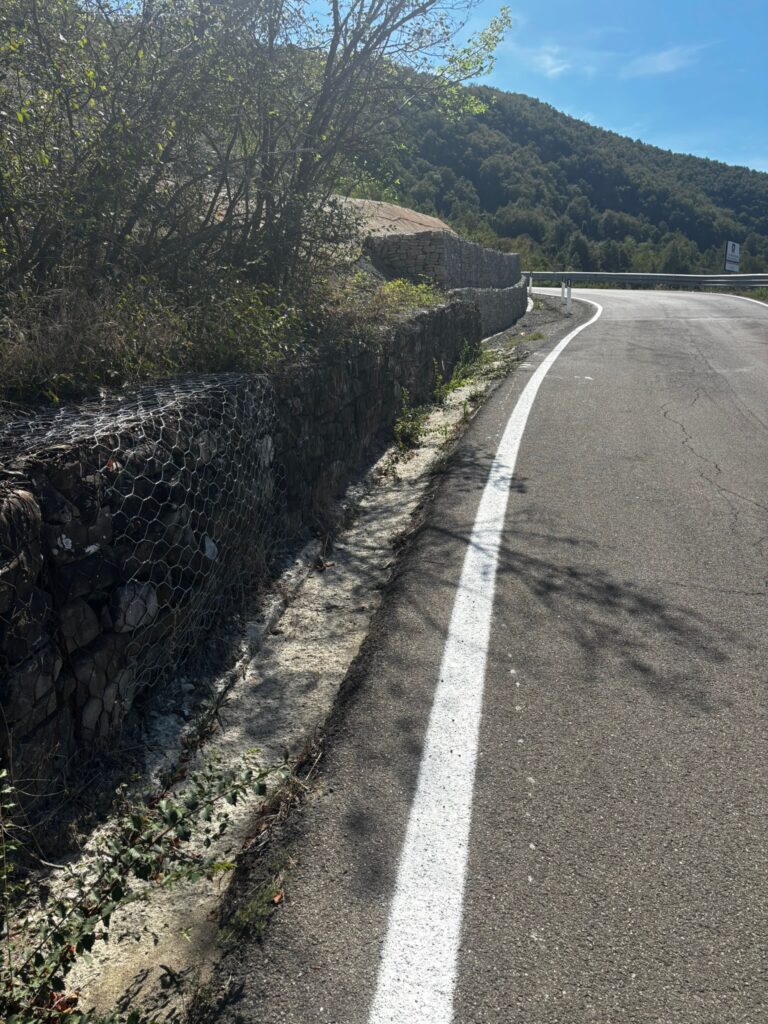
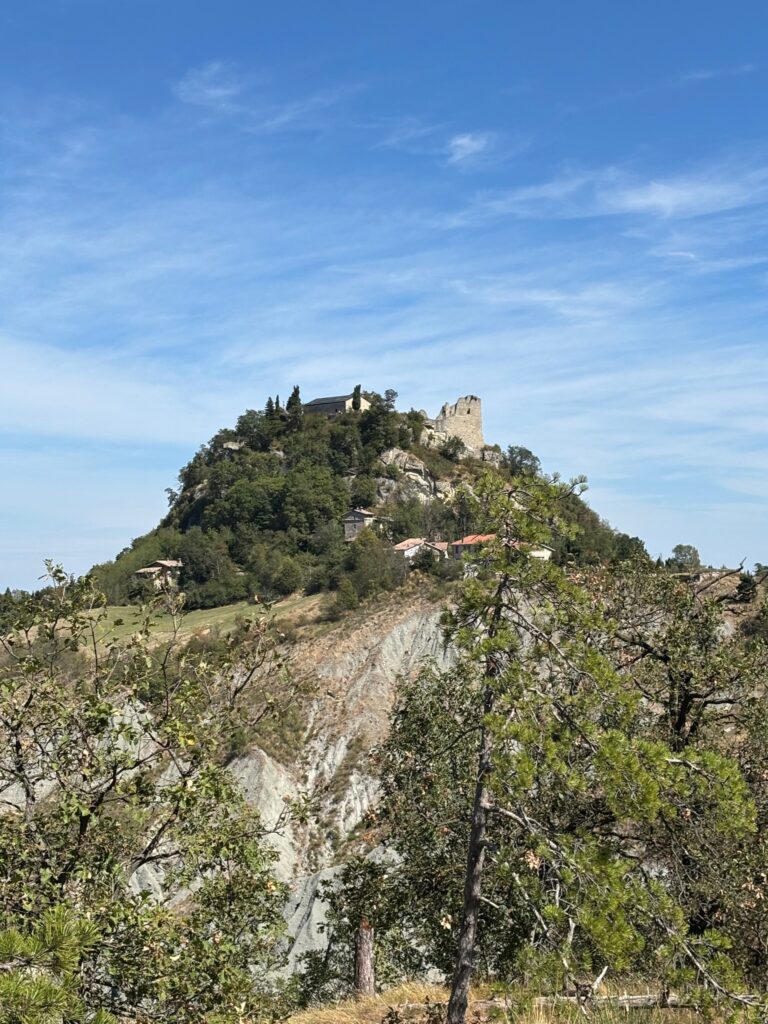
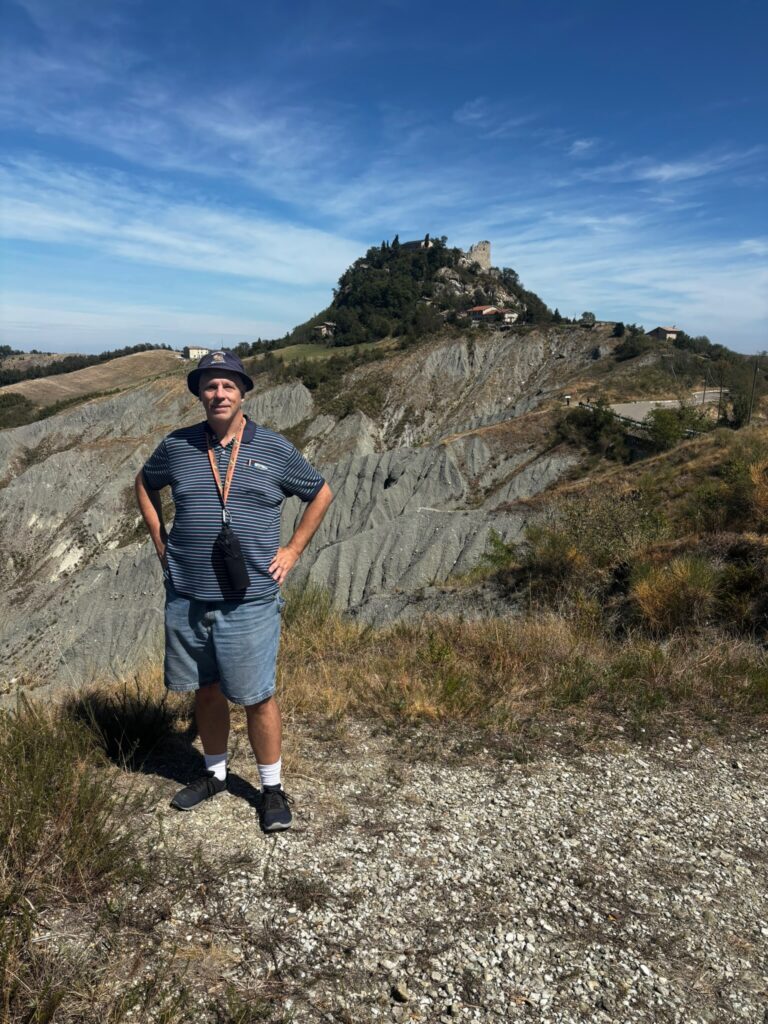
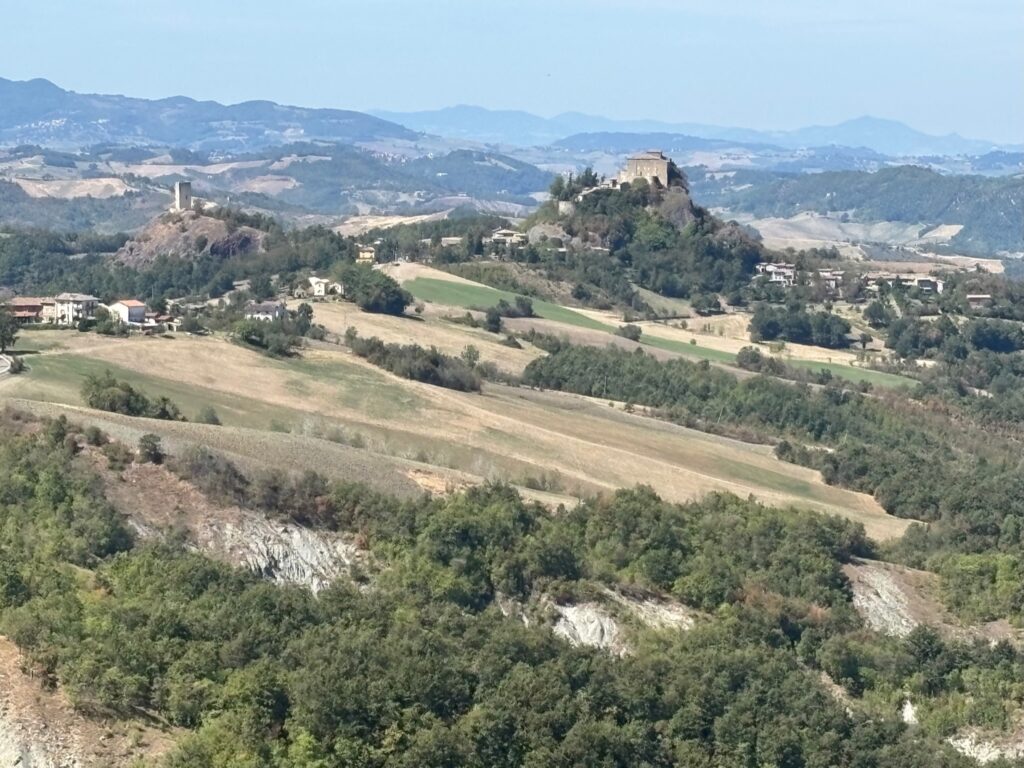
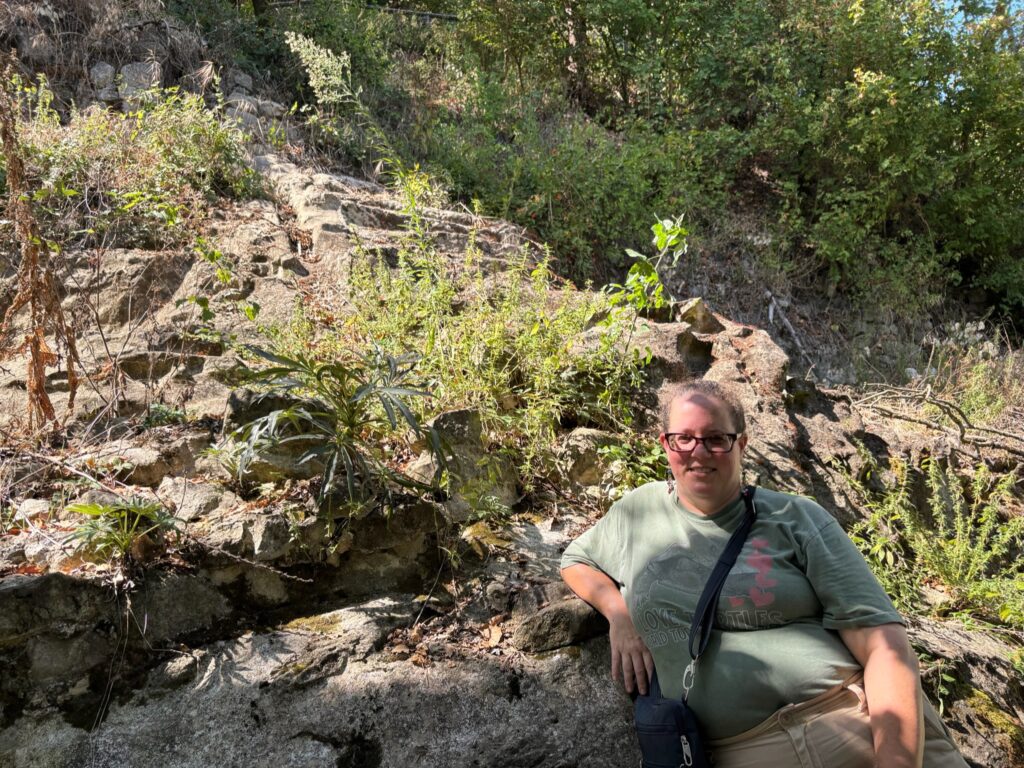
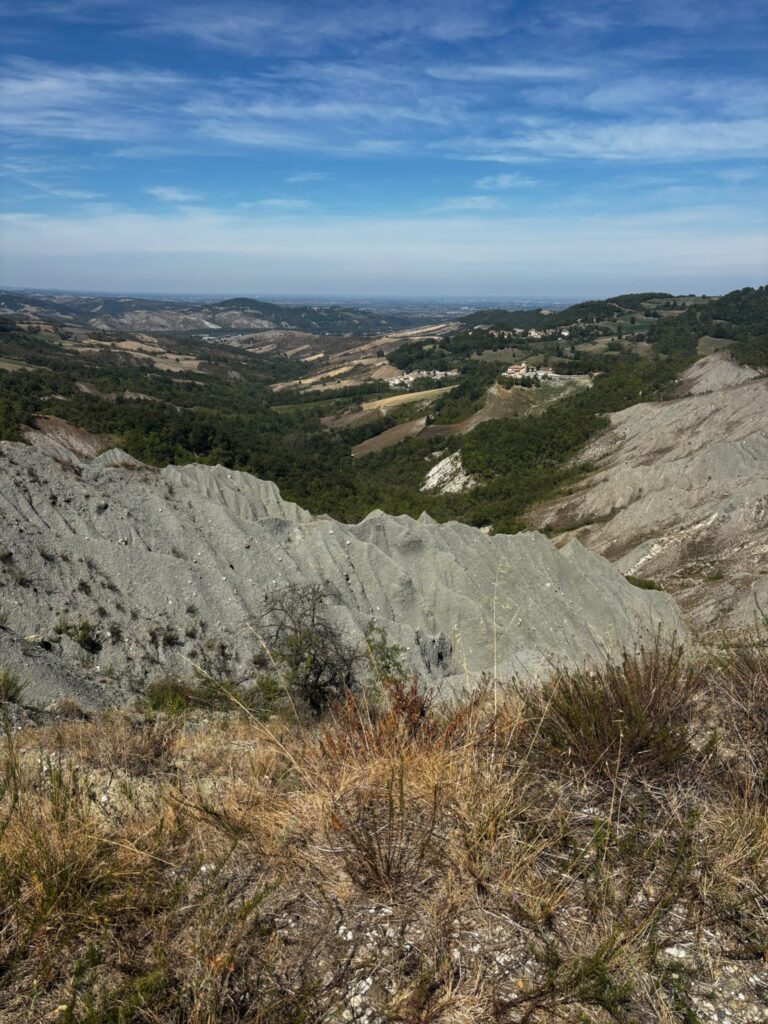
So I was physically miserable, and it was really hot (mid-90s for most of the day), and we had no way of getting ourselves anywhere except by walking…but also, here we were, in this extraordinarily cool place that I had so wanted to visit—and with only one day to explore it before moving on to our next destination the following morning. Nothing for it but to suck it up and spend the day doing an outrageous amount of walking in the extreme heat (much of up up steep inclines)! I had wanted to visit the ruins of Canossa Castle, so after breakfast, we set off up the road on foot.
A History Lesson
So in the year 1076, Holy Roman Emperor Henry IV was excommunicated by Pope Gregory VII. An important reform movement was in progress across Europe aimed at reinvigorating the moral and spiritual life of Christendom and improving the caliber and discipline of the clergy. Henry’s father and predecessor, Henry III, had actually been a significant force in this movement, working closely with German bishops. In fact, it was the elder Henry who first brought the reform movement to Rome, at a time when local aristocratic families vied for control of the papacy and used it largely to further their own interests, and popes exercised little power (and could claim even less moral authority) over the clergy outside of Italy. Henry III installed reformers in the papal court and freed the papacy from local aristocratic control, at first by appointing a succession of German popes; subsequently, a reform pope established the college of cardinals to provide for papal succession independently of secular influence. But the elder Henry’s work set events in motion that seriously backfired for his heir. In 1073, a leading reformer and powerful figure in the papal curia by the name of Hildebrand ascended the papal throne as Gregory VII. Hildebrand was a zealous ideologue and an ambitious leader with a reputation for being ruthless and uncompromising —a combination of traits that led a fellow reformer to nickname him “holy Satan.” As pope, he turned the ideals of the reformers back on the emperor (as well as the other monarchs of Christendom) by denouncing lay investiture—the practice whereby bishops were selected, and invested with their offices, by secular rulers—and thereby kicked off what is known as the “investiture controversy.” This was partly a religious issue (kings and other feudal lords frequently “sold” bishoprics, which constituted the sin of simony), but it was also about who controlled the powerful bishops and archbishops who were theoretically members of an ecclesiastical hierarchy that answered to the pope, but who were also powerful secular lords who controlled vast landholdings and upon whom the emperor (and other kings and feudal lords) relied heavily in their efforts to exercise effective power in their realms. Faced with perennially rebellious secular vassals, Henry needed to be able to control episcopal appointments to shore up his position. Thus, he paid the pope’s denunciations no heed, and continued appointing and investing candidates of his own choosing to major bishoprics. Hence, excommunication. (Bold claims and harsh words were uttered on both sides of this dispute. Gregory put forth the assertions that popes could depose emperors and absolve subjects from fealty to unjust rulers; Henry had a synod of bishops who were loyal to him write a letter to Gregory renouncing obedience to him, calling him “Hildebrand now not pope but false monk,” and deposing him with the words “descend, descend, to be damned throughout the ages.”) The emperor’s secular vassals seized upon his excommunication as an excuse to once again revolt against his authority, leaving Henry in a very tricky situation. In fact, they made plans to hold a council in Augsburg in February 1077, to be presided over by Gregory, at which Henry would be formally deposed and a new emperor chosen. Henry’s only chance to forestall this was to hurry to Italy and convince the pope to back down before he, in turn, made his way across the alps to meet up with the German nobles. And this is what brought the emperor to Canossa in January 1077, where he intercepted Gregory on his way north, at the stronghold of Countess Matilda, a major power in northern Italy and an important ally of the pope. Exchanging his royal attire for a penitent’s garb, Henry is said to have stood outside the castle barefoot (in the snow, according to legend) for three days, humbly begging absolution for his sins. It was simultaneously a huge symbolic win for the papacy, providing a sensational illustration of Gregory’s claims about the subordination of secular rulers to the spiritual authority of the holy see…and also a shrewd move on Henry’s part, effectively forcing Gregory’s hand. The pope could not refuse a penitent Christian’s very public humble request for forgiveness, nor could Gregory afford to lose the moral high ground as a reformer by appearing tyrannical and focused solely on papal power. He had no choice but to lift the excommunication, thus buying Henry the time that he needed to deal with the rebelling German nobles. The meeting at Canossa did not end either the strife between Henry and Gregory nor the larger investiture controversy, but it was by far the most dramatic and memorable event in that struggle, and it had lasting repercussions (for the empire, the papacy, and the whole of Western Christendom) throughout the later middle ages.1 And all of this is why a certain medieval history nut by the name of Dave La Fave got it into his head that when he went to Italy, it would be really cool if he could visit Canossa.
So there we were, trekking up the road toward the castle, with me trying to imagine what it might have felt like to be Henry IV seeking an audience with the pope here in the winter of 1077. Of course, during our visit, there was definitely no snow anywhere to be seen. The extreme heat actually made me reflect on the fact that, when I read/think about medieval history, I think I tend to unconsciously imagine it as having been cold and dreary all the time; it felt wrong somehow for it be 95 degrees and sunny here! But on the other hand, there’s this: Thinking back to this day now, I for sure remember—in the sort of abstract way that one knows/remembers facts—that I felt like crap from my cold and headache, and that both this and the extreme heat were making it hard for me to enjoy being in Canossa the way I wanted to. But none of that ended up really coloring the subjective quality of my memories of the day; what has stuck with me, instead, is mostly just how excited I was to be there and how awesome it was! Also, I went into the experience with a certain amount of knowledge about and interest in the historical players of emperor and pope, but came away with a heightened interest in the third player: Countess Matilda. There was stuff about her all over the place around the Canossa area (both at the castle and in Ciano). I saw, in various places, copies of the same medieval illustration depicting the idea of her interceding with the pope on Henry’s behalf that I remembered having seen reproduced in a history book that I have owned for decades. Her legacy has clearly endured locally, where she’s become a kind of figurehead for the area’s history. There are things named after her in the area (including the whole of the surrounding hilly area of Reggio Emiiia, the “Terre Matildiche”). She counted prominent churchmen and reformers from far-flung parts of Europe as personal friends and acquaintances, and she wielded a kind of power, and still retains a level of fame, that was far from common for a woman in the eleventh century. And also, charmingly, we learned (after seeing several depictions of her that featured one) that the pomegranate was her personal symbol, chosen deliberately by her and possessing several layers of symbolic meaning. (We had already noted that pomegranate trees were common in the area; we spotted our first one right outside our B&B.) Anyway, all of this was just really fun, and is exactly the sort of thing that I hope to to encounter when I travel thousands of miles from home to visit the places where centuries-old history that I’ve studied actually took place.
Thanks largely to a wrong turn en route to the castle, we first ended up discovering a path that led us through an area where signs identified and described the scant remains of the “borgo antico di Canossa”—the medieval village that once existed just below the high ground occupied by Matilda’s castle. These were more interesting than they were visually impressive, so we didn’t end up taking any pictures; still, I was glad that we had chanced upon these ruins. Afterwards, we found our way up the hill to the castle itself. By then, though, we were hot and tired and hungry and ready for a lunchbreak. Fortunately, there was a small “bar” (with mostly outdoor seating) and bookstore just down one branch of the path that led to the castle, so we went that way first. The internet says that the place is called “Andare A Canossa,” but I don’t recall seeing that on any signage; there was a sign that identified at as “Il Bacio di Matilde,” though. Here are a couple of photos that I totally did not take, but instead cheatingly found just now on the internet:
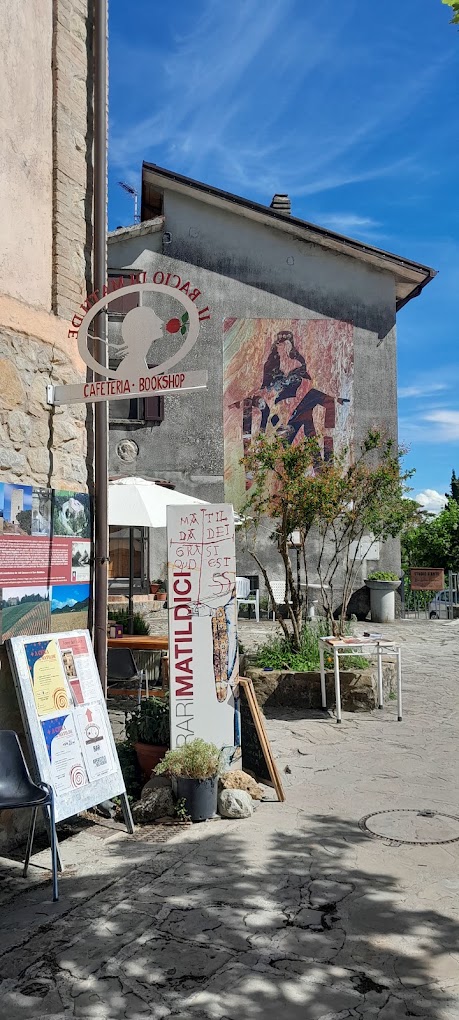
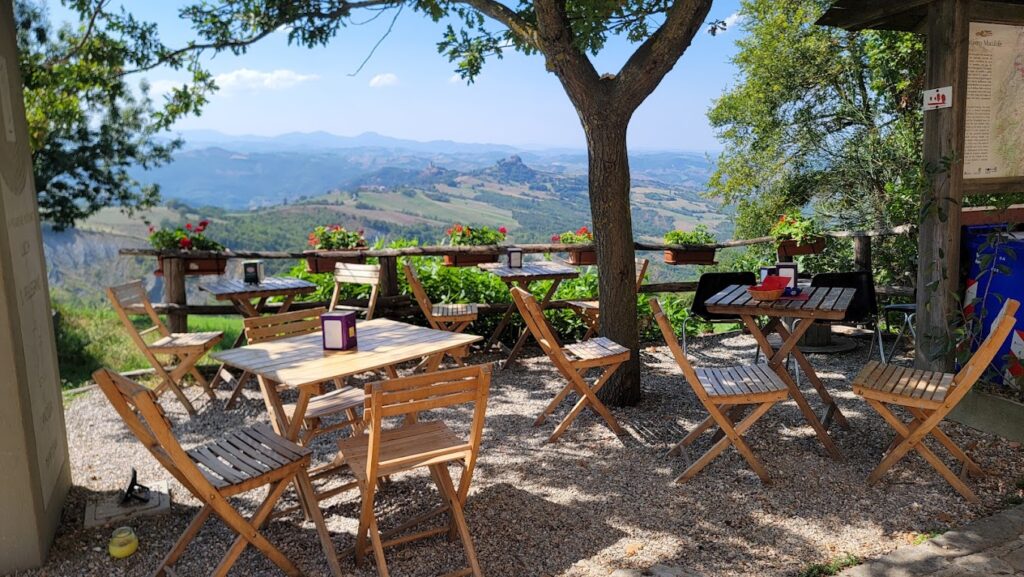
A couple of things happened for the first time while we were there. For one, it became our first real experience figuring out how to order food at an Italian eatery (I’m not really counting the train station place from the night before, I guess). No one there spoke much English, so we communicated by pointing at things and asking what they were in deeply imperfect Italian, then doing our best to make sense of the answers. Still, Emily ended up with something called “erbazzone”: a kind of little spinach pie that is (we learned) a characteristic dish for the Reggio Emilia area, and that she really liked (and I liked the bite of it that I tried, too; it was very oniony). My meal consisted mostly of a platter of different pig-based meats (prosciutto and salamis and whatnot), with some cheese and some bread that honestly wasn’t all that great. Anyway, the other “first” that happened here was that we saw actual local evidence that the historical reenactment that was supposed to be happening that evening (the reason why we had scheduled our visit to Canossa for this particular day) was a real thing; there was a sign advertising it outside the bar/bookshop. That was comforting to see! (Info online was scant, and our B&B hosts didn’t seem to know about it, so the whole thing had seemed a little iffy before this.)
After lunch, it was castle time. There was a small museum wherein we sat and viewed a short film about its history, but exploring the ruins was the main attraction!
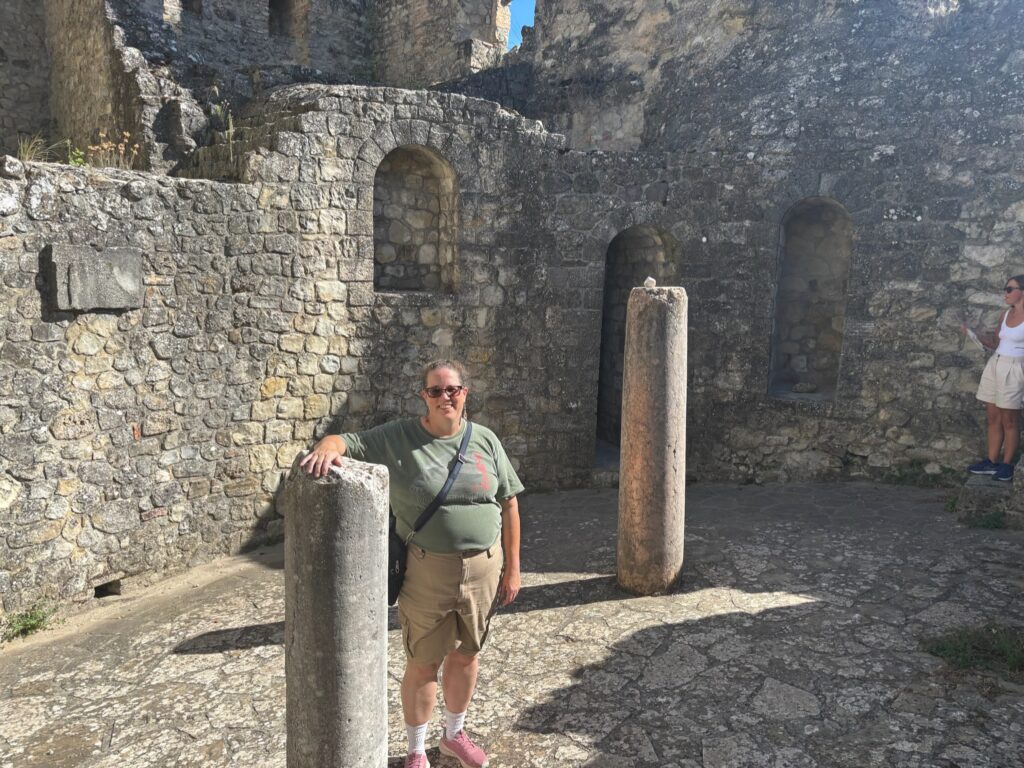
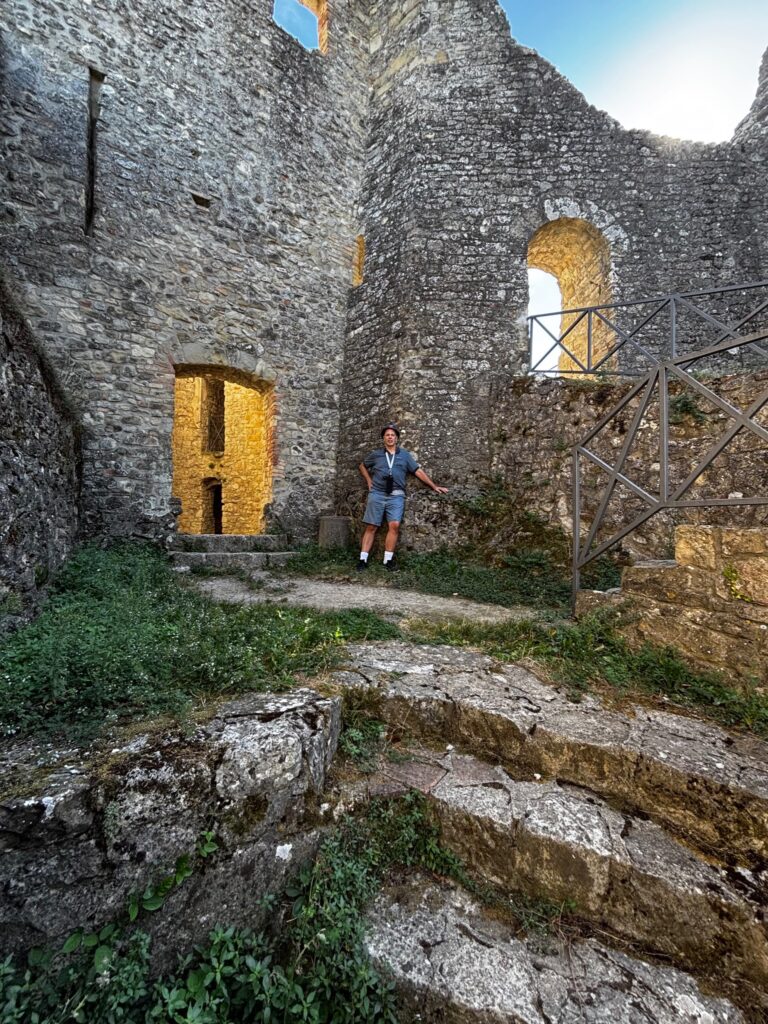
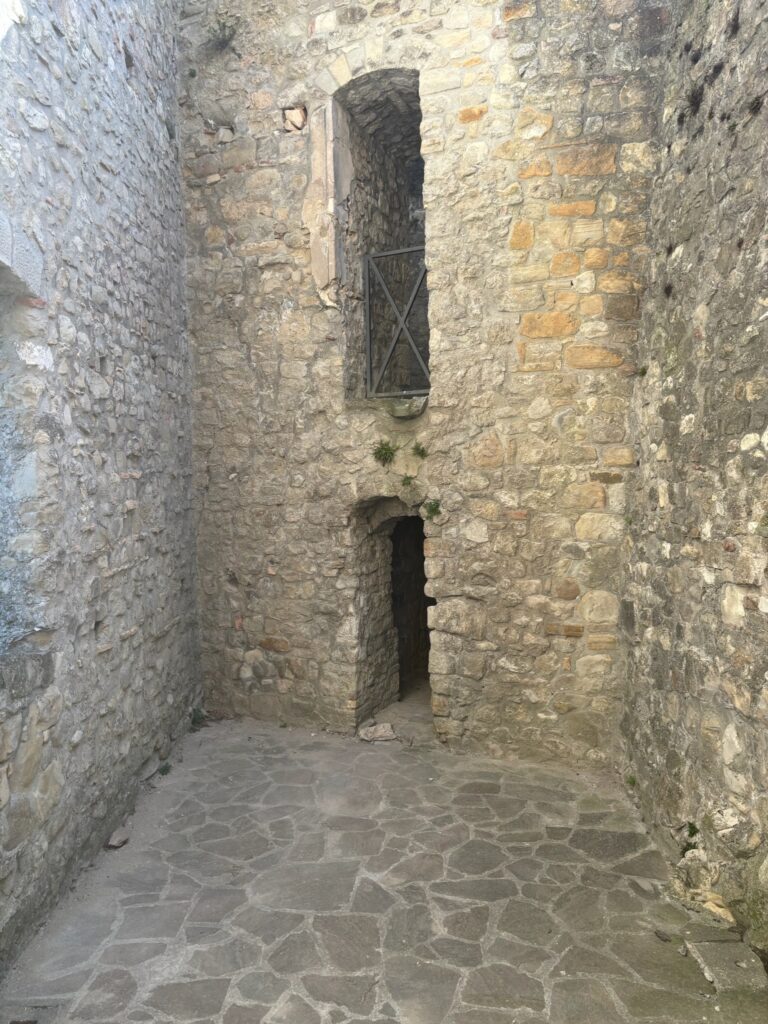
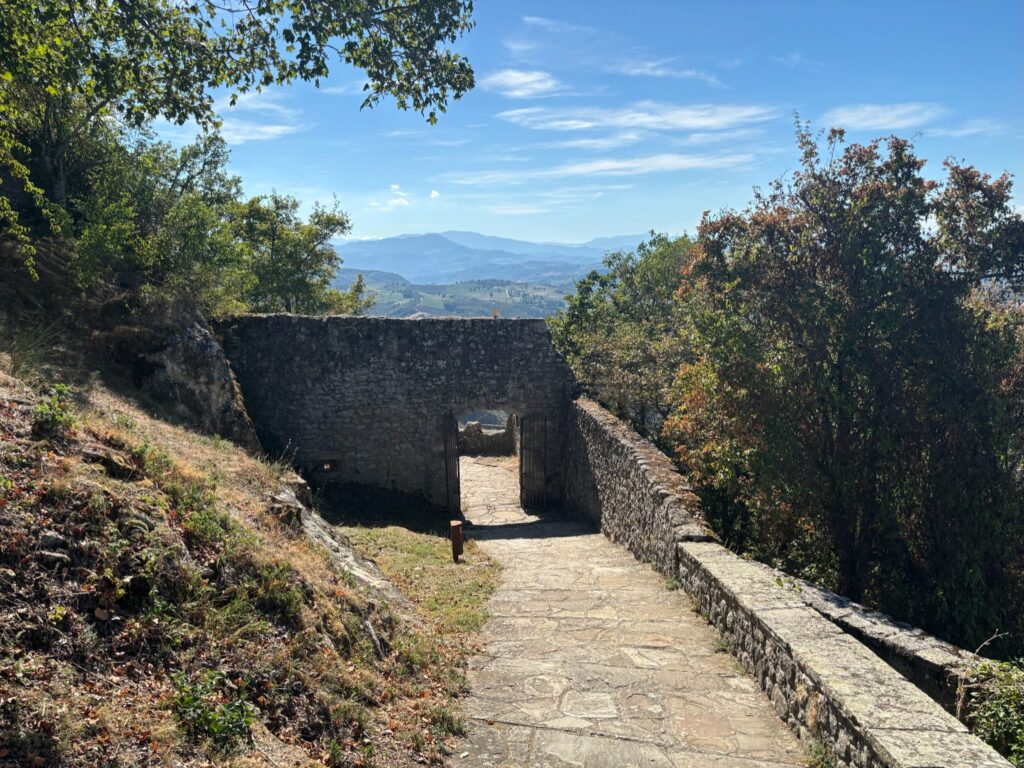
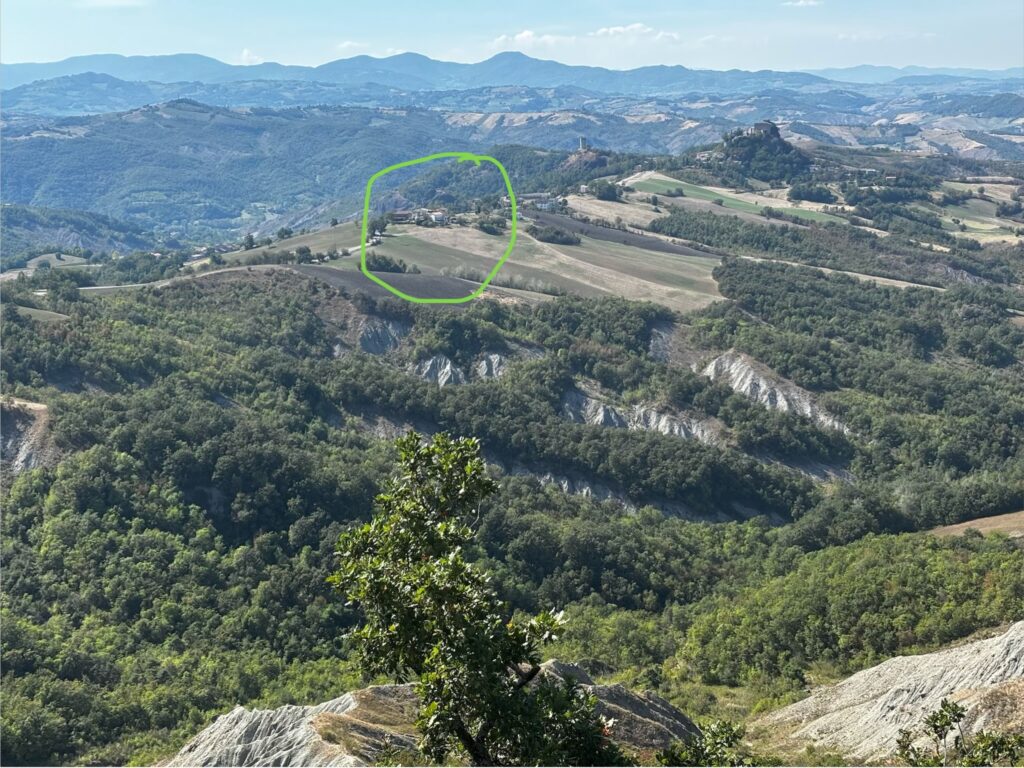
After checking out the awesome castle ruins, we retraced our steps back to the B&B. We knew that time was getting away from us and that if we wanted to make it to town, where the reenactment was supposed to be happening, in time to see it, we pretty much needed to go straight there, but we are also very hot and tired and in need of a rest. Unfortunately, the end result (spoiler alert) was that we did not end up getting to see the actual reenactment. This was disappointing, but not a disaster, especially since we did still get to see other fun stuff…but I’m getting ahead of myself. So after our rest/nap at the B&B, we again ventured out on foot, but this time down the road, back toward town. We were uncertain whether the road was the best/only route or if there was a walking path that we could take instead; there were reasons to believe the latter, and Google maps seemed to be leading us somewhere, but it was confusing. We followed the road as far as Rossena Castle (a more intact castle than Canossa Castle which was once held by Matilda’s great-grandfather, and which would have been fun to actually visit if we’d had more time), then abandoned it for a little street through the “borgo” (village) of Rossena, where people actually live. Here we became uncertain, as it seemed like maybe we were heading onto private property, or maybe even into a dead end. But there were some locals hanging around, and one of them notices us looking unsure of ourselves and asked if he could help. He did not, of course, speak English. (I should add that while the Canossa area does attract some tourists, we were told by our B&B hosts that they do not get many Americans there. Everyone was always surprised to learn where we were from. I don’t think we encountered a single native English speaker the whole time we were there.) But he did inform us that we were on track toward a path that would lead us to Ciano, though he warned us that is was unpaved, rugged, and steep. (We—or rather, mostly Emily—more or less understood what he was telling us. We assured him that we were up for it and would not, in fact, prefer asphalt, as he wondered if we might. There were for sure some details that we didn’t catch, though.) Anyway, the path indeed proved to slope fairly steeply downhill, and to be made of loose, uneven gravel, which made for treacherous footing. It was also woodsy and isolated, and since we expected that it would be dark by the time we were trekking back up to the B&B, we realized that it would not be a good route for the return journey. Still, the steepness was a result of the path heading in much more of a straight line than the road did, which made it quite a shortcut.
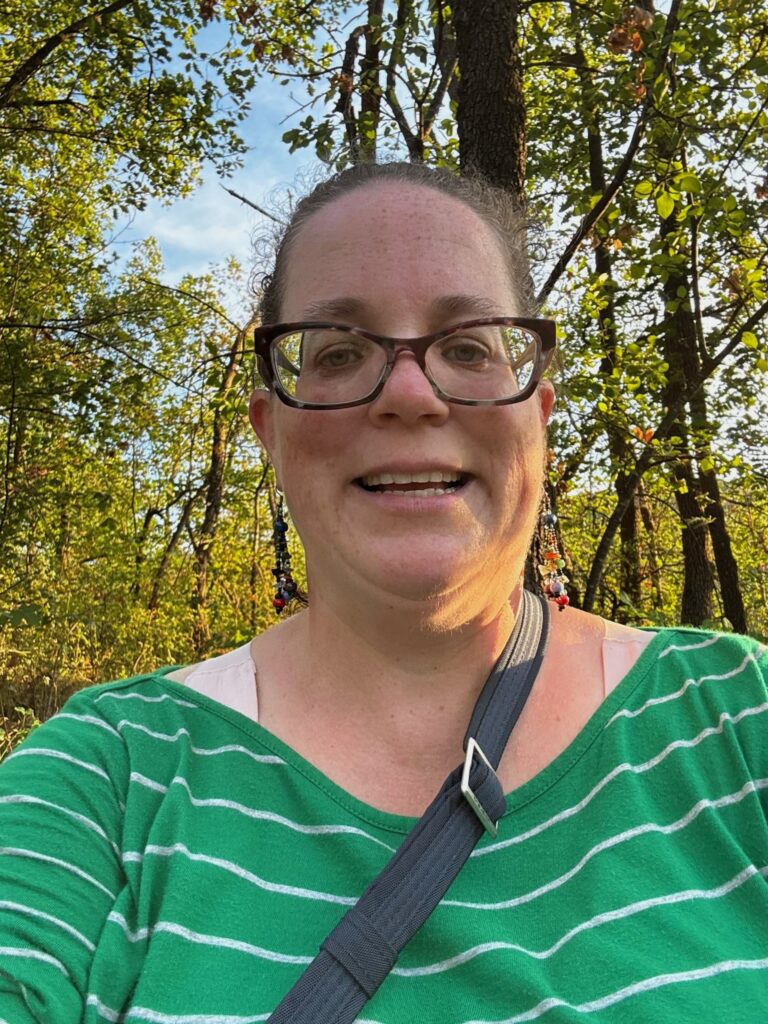
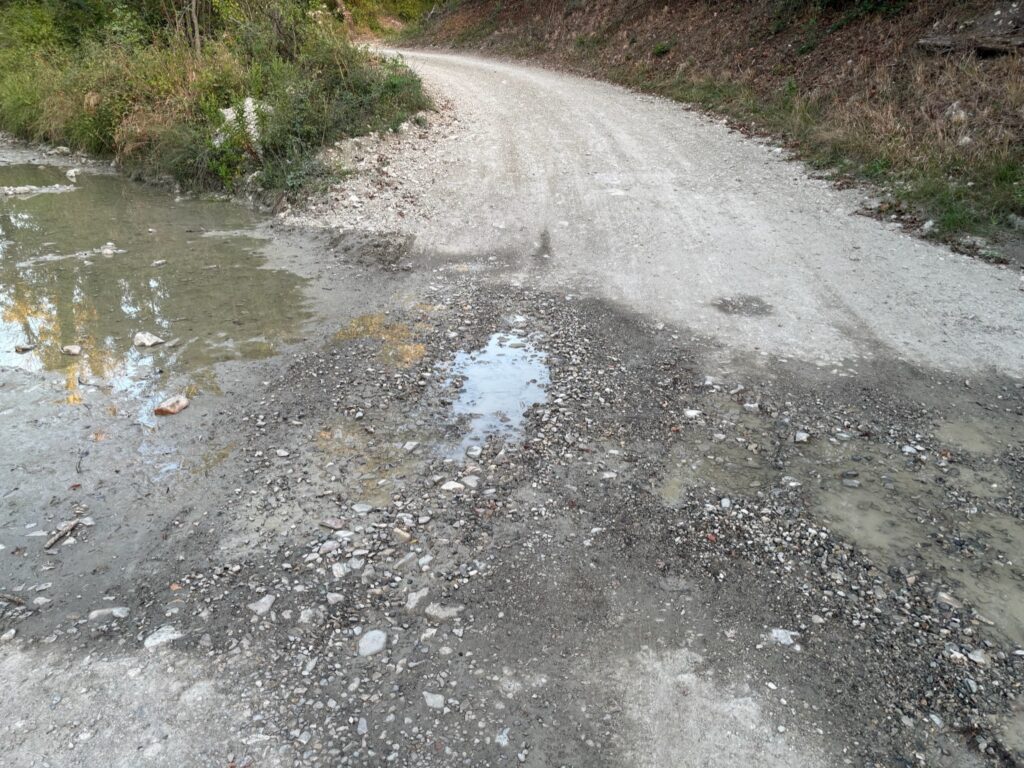
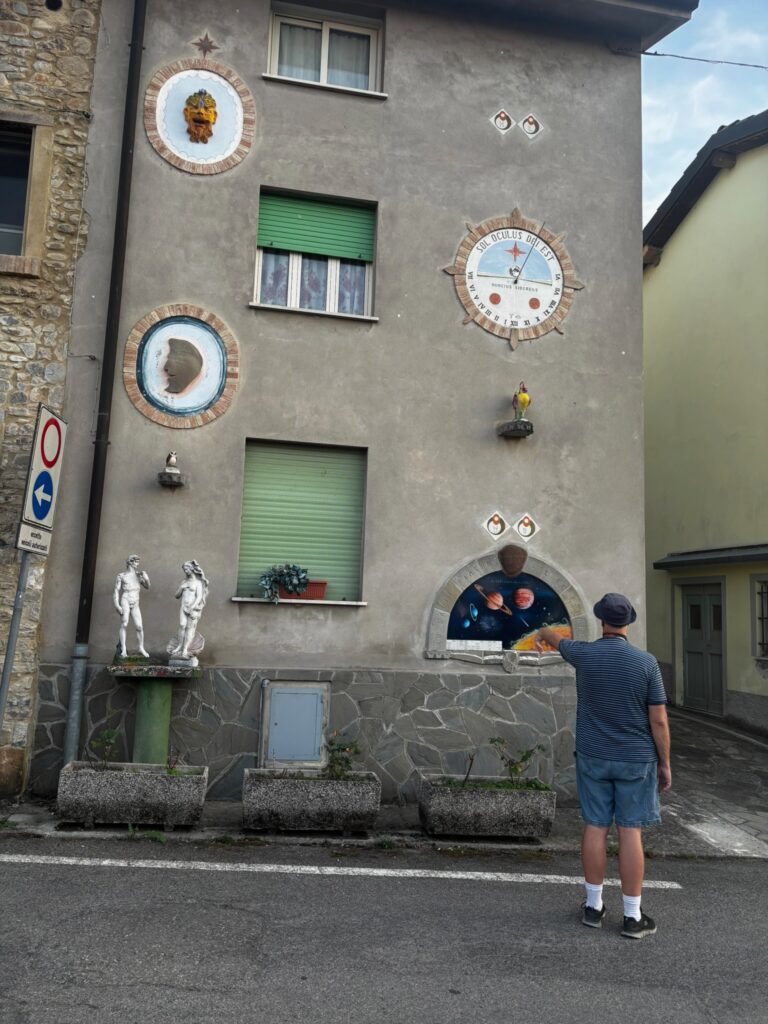
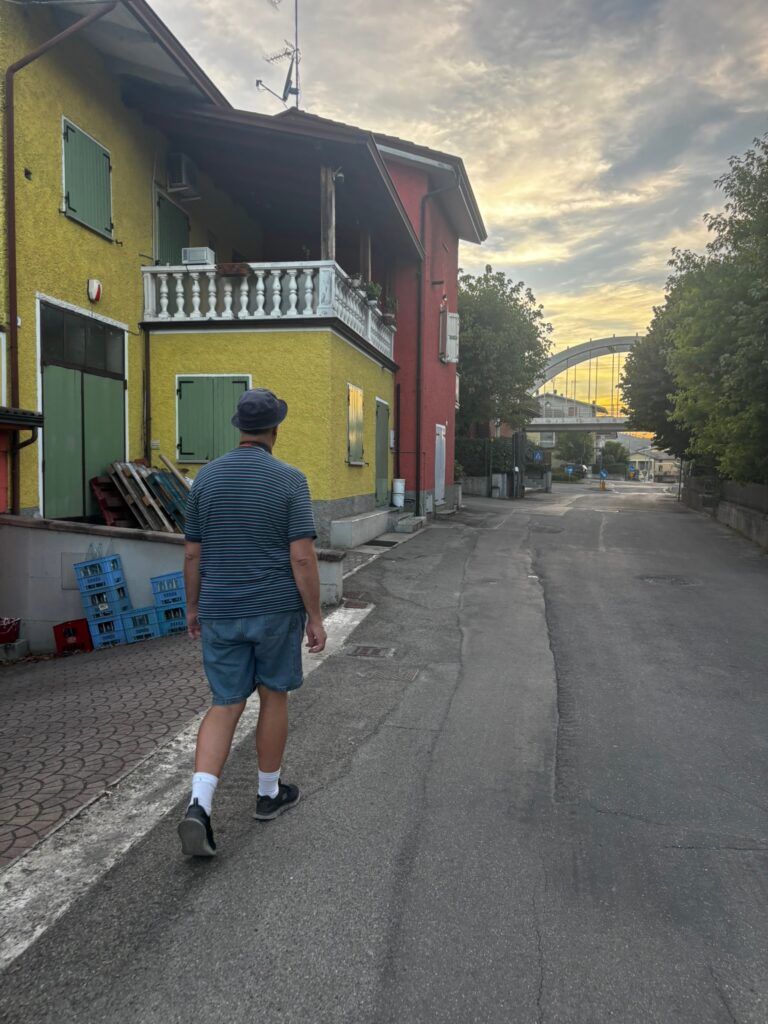
Despite the shorcuttiness of our path, we nevertheless (as previously mentioned) got to town too late to catch the reenactment of the “humiliation of Canossa.” However, the reenactment was just one part of a whole village festival that went on for many more hours, so we didn’t completely miss out. When we finally found our way to the Piazza Matilde, we saw an assortment of food trucks/booths and other vendors selling various wares. Our first impression was that things were kind of winding down already, but this proved to be far from the truth. It was very much dinnertime, though, so we surveyed our options and each picked a different place to get food from. I enjoyed a panino salsiccia. When I ordered it, the guy asked me if I was okay with peperoni and cipolle on it. I barely took in what he said and pretty much just nodded, but at least I knew enough Italian to understand that “peperoni” meant peppers and not what we call pepperoni! Anyway, even though it was just quick-serve festival/street food, this was the first really good thing that I had to eat in Italy. It was very tasty!
We found a place to sit (there were tables and chairs set up in the piazza) and dug in. Meanwhile, there was a juggler on stilts wandering around, and then a bit later another juggler (or maybe it was the same guy, I’m not sure) on a unicycle (and juggling flaming torches, for crying out loud). After we ate, we did some browsing/shopping. Emily bought a cool hairpin/clip thingy that, dammit, she ended up setting down somewhere and forgetting, so that we never saw it again. 🙁 But then, as it was getting dark, stuff started happening! We heard drums, and trumpets playing fanfares, and then a long procession of locals in various medieval costumes marched into the piazza, carrying all kinds of flags and banners. It was totally awesome!
I can’t quite explain why, but something about being there and getting to see this really gripped me, in a way that went beyond just “hey, this is kind of cool.” I guess I was just getting caught up in the idea of growing up and living in a place with literally thousands of years of history, especially as I watched some of the younger costumed participants and trying to imagine what it would be like, as a kid, to live in a place like this. I felt a sense of timelessness, connecting what was happening here and now with what it might have been like to live here hundreds of years ago and take part in whatever civic festivals the town might have held through the ages. (Also, a little later, while I was listening to the musicians, I thought about how they were a local analogue to my community band back home. If I lived here, would I be one of those musicians? But of course, it’s not like there were any saxophones…)
Once the whole procession had made its way into and across the piazza, there was a long series of performances alternating between flag tossers (sbandieratori) and people spinning and tossing around flaming torches and chains and stuff. It was spectacular!
Eventually, the performances ended and all the costumed people marched their way back out of the piazza. It was pretty late at this point, and we had a long walk back to our B&B ahead of us. It took WAY longer to walk up the winding road in the dark than it had taken to walk down the steep path in the daylight; also, there wasn’t much of a shoulder, so we kept having to step off the side of the road whenever cars came. We were tired, but also happy. It had been an awesome day! We walked and walked and walked, finally making it back to the B&B, if memory serves, around midnight.
That about wraps it up for the Canossa portion of our trip. The next morning, Elena would graciously drive us into town and drop us off at the train station/bus stop where Isolina had picked us up that first night. But first, during our second morning’s breakfast on the terrace, Emily asked our hosts about the history of the B&B (and specifically their family’s history with it). Isolina was going to have her daughter answer this question in English for us, but Elena wanted her mother to be the one to share the story, and expressed confidence in our ability to understand enough of her Italian (which was pretty cool). And I think we did get the gist of the stuff she told us, even if not all the details (and I’m not sure quite how much I can remember now). It sounded like the place had come to them via her late husband, and that it has been in a state of considerable disrepair after having been abandoned for some while. A bunch of restoration work was then done (in the 1970s, I think), but it wasn’t quite clear whether this was done by Isolina and her husband, or just the husband, or someone else entirely. For years, they would stay there (and rent out rooms) only over the summer; now, however, Isolina lives there year-round, while her daughter comes and helps her run the place in the summer but otherwise lives in Bologna, if memory serves. I hope I’m getting this mostly right; it’s not like I took notes, or anything. Also, she talked about the building having originally been a residence for local nobility, and having some kind of function in connection with “the castle” (but whether Rossena or Canossa Castle, I’m not sure). She even pointed out a partially intact wall painting in the main hall that was centuries old and had at one point been plastered over (I had actually noticed it previously, and found it quite intriguing). Anyway, learning a bit about the B&B and about our hosts was a fun way to end our visit to a totally awesome place.
- I drew heavily on my trusty copy of Europe in the Middle Ages by Robert S. Hoyt and Stanley Chodorow (3rd edition) in putting this little history lesson togther, and also made some use of Medieval History: The Life and Death of a Civilization by Norman F. Cantor (2nd edition). ↩︎